Research
Agency for Defense Development (ADD)
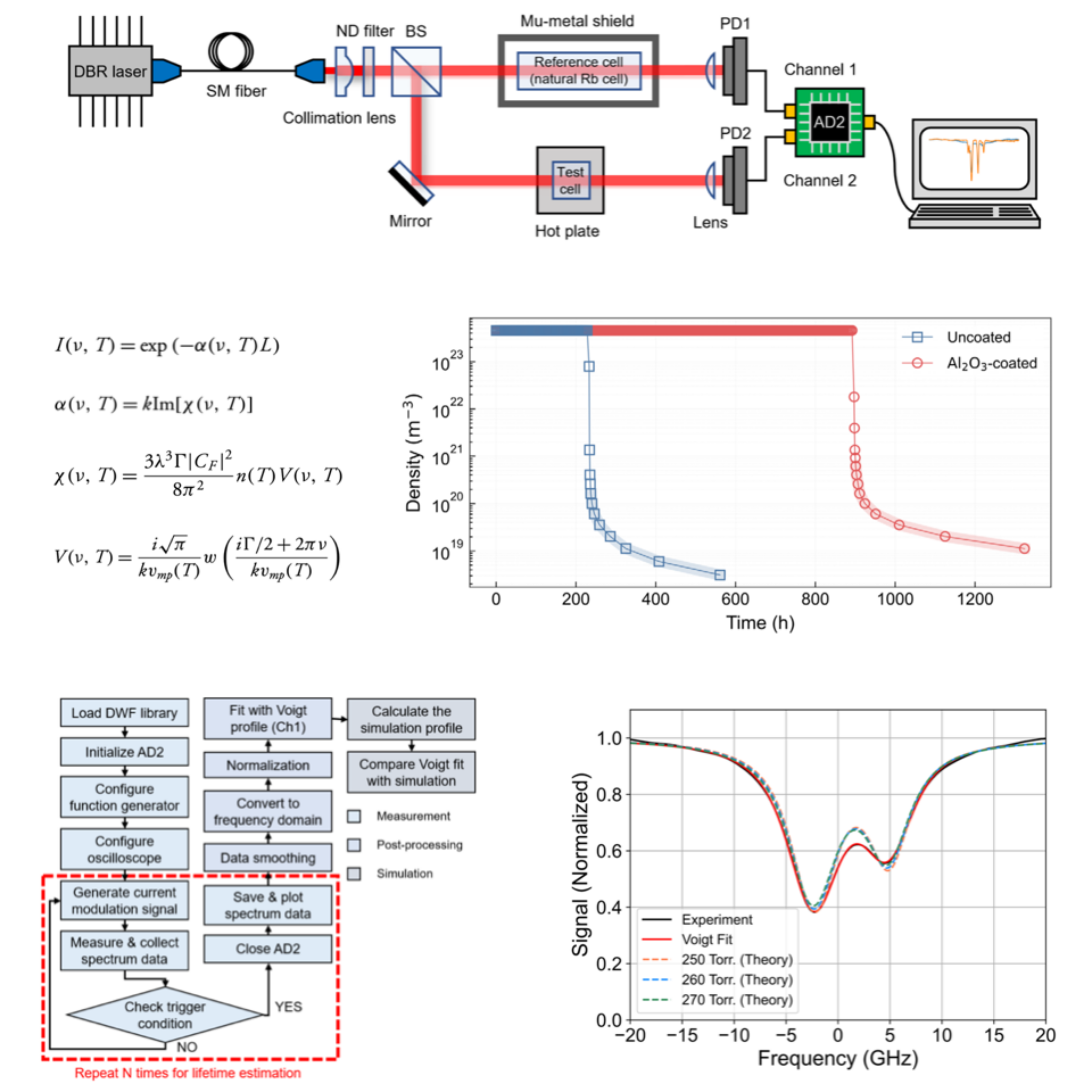
Atomic Spectroscopy of Rubidium Vapor Cells
This work quantitatively characterized rubidium vapor cells using absorption spectroscopy combined with atom–light interaction modeling. An automated spectroscopy system was developed to evaluate the properties of rubidium vapor cells, enabling estimation of buffer-gas pressure and lifetime assessment based on monitoring the rubidium atom number density.
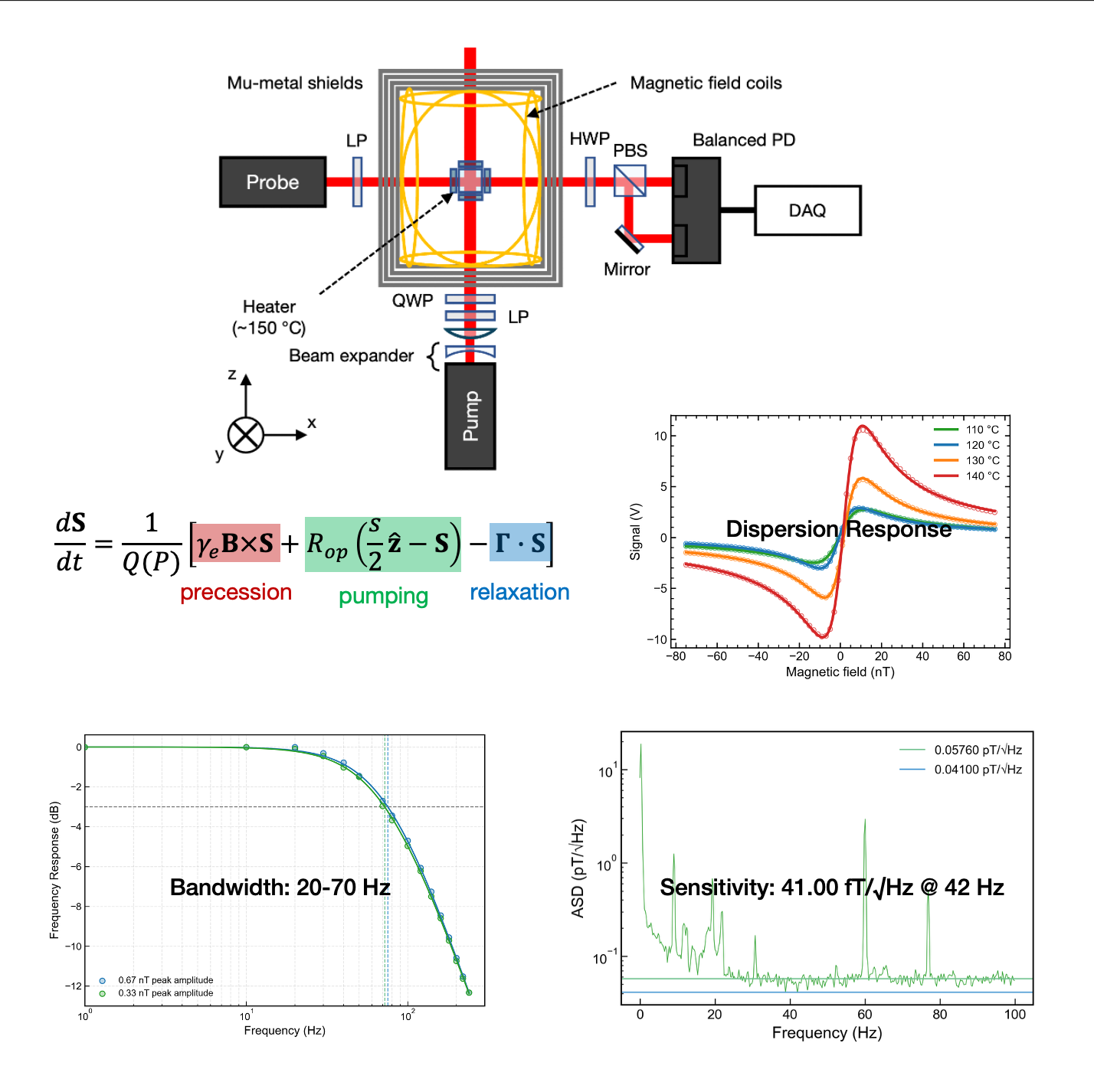
Optically Pumped Magnetometers (OPMs)
This work focuses on the development and field demonstration of a portable all-optical atomic magnetometer. A zero-field optically pumped magnetometry platform was developed to characterize the magnetic perturbation generated by electronic components, thereby guiding component selection and placement for improved sensor sensitivity. The developed atomic magnetometer was mounted on a drone to conduct magnetic anomaly detection, demonstrating its capability to detect concealed large-scale infrastructure.
Undergraduate projects
Selected research projects conducted during my undergraduate studies
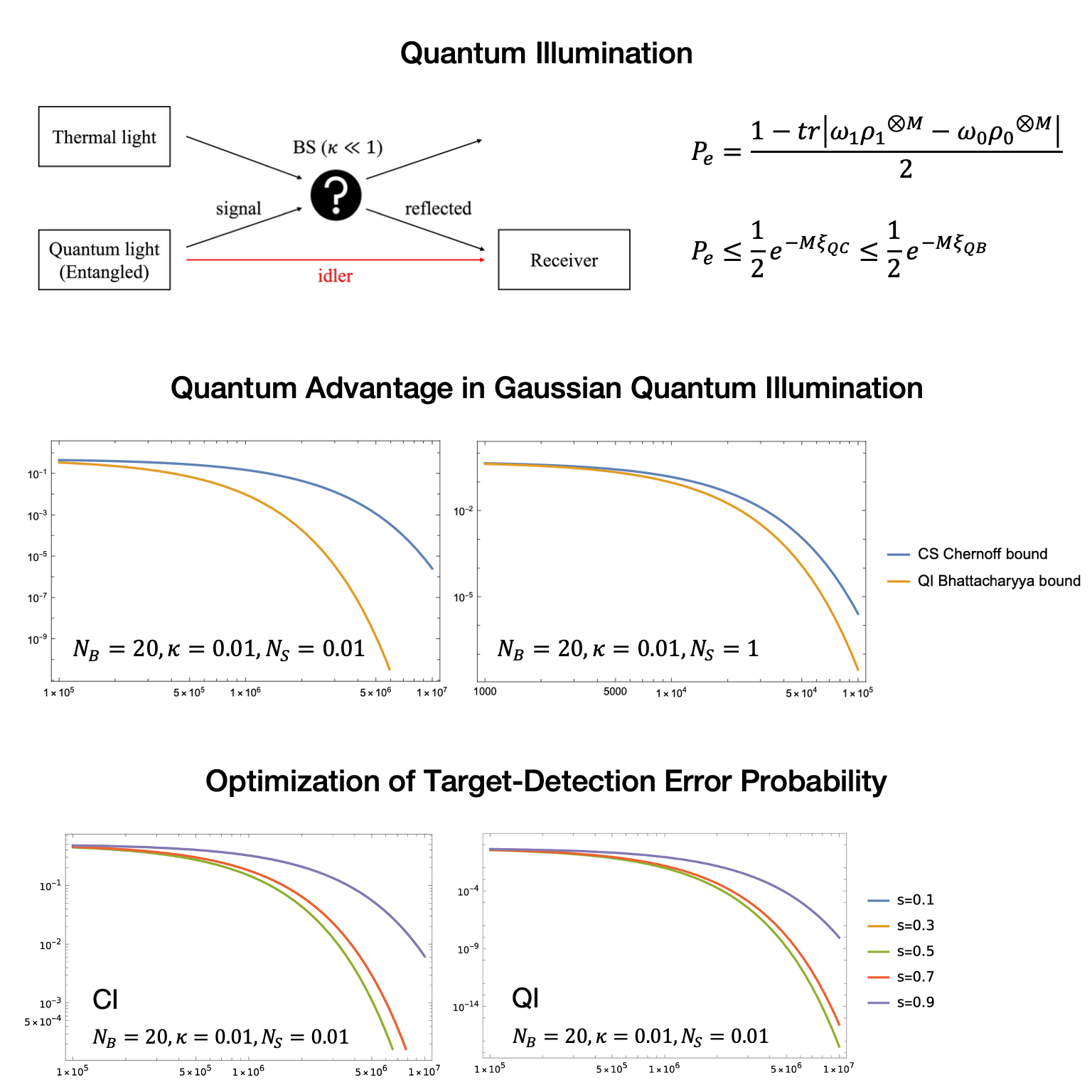
Reconstruction of Quantum Illumination with Gaussian States
This project was conducted as part of Exploration Project in Physics 2 (PHYS0352), a senior undergraduate course-based research project.
This work explored quantum illumination by reconstructing error-probability bounds for Gaussian-state target detection. I studied quantum hypothesis testing and Gaussian-state discrimination, and applied them to classical illumination with coherent-state light and quantum illumination with a two-mode squeezed-vacuum state. The reconstructed results compared the target-detection error probabilities of the two cases, showing quantum advantage in the low-signal-photon-number regime and its degradation as the signal photon number increased.
- Period: Sep. 2023 - Dec. 2023
- Course: Exploration Project in Physics 2 (PHYS0352)
- Project Advisor: Prof. Changsuk Noh, Deptartment of Physics, Kyungpook National University
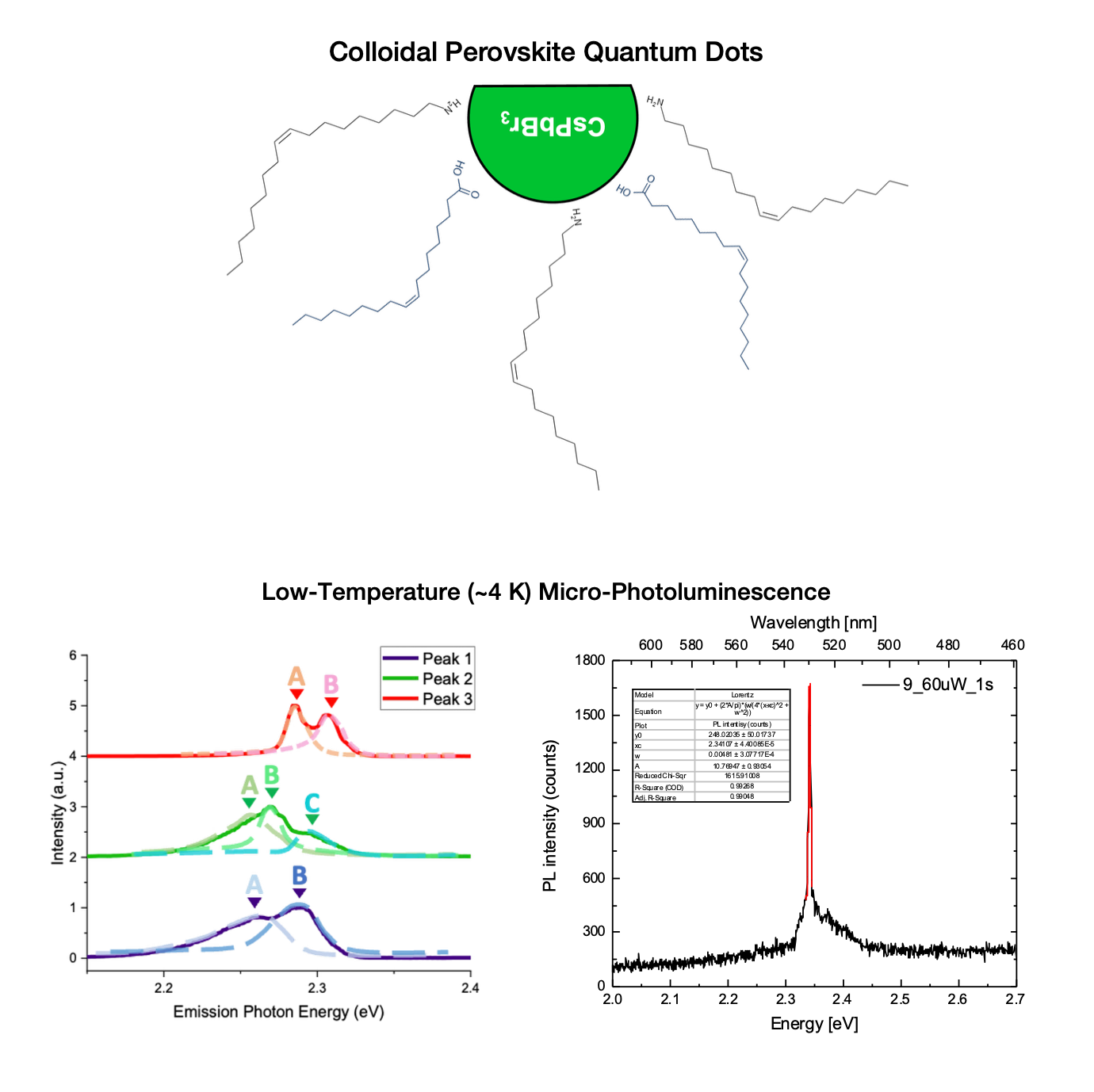
Semiconductor quantum dot-optical fiber connection study for wired quantum cryptography communication
This work presents the feasibility of integrating CsPbBr₃ perovskite quantum dots (QDs) with optical fibers for wired quantum communication. CsPbBr₃ perovskite QD samples were fabricated as single-photon sources by spin-coating colloidal solutions onto Si substrates under varying process conditions. QDs were characterized by micro-photoluminescence measurements at room and low temperatures (~4 K), and QD-fiber coupling was carried out using polydimethylsiloxane (PDMS) and an optical microscope. Furthermore, finite-difference time-domain (FDTD) simulations were employed to design a free-form intermediate structure to enhance quantum dot-fiber coupling efficiency. These results suggest the potential of perovskite QDs for fiber-based quantum communication, while future incorporation of single QDs into the designed structure may enable high-efficiency quantum dot–fiber coupling.
- Period: May. 2023 - Nov. 2023
- Affiliation: Quantum & Nanobio Photonics (QNP) Lab, Department of Physics, KAIST
- Award: 2nd Prize, 2023 Militech Challenge
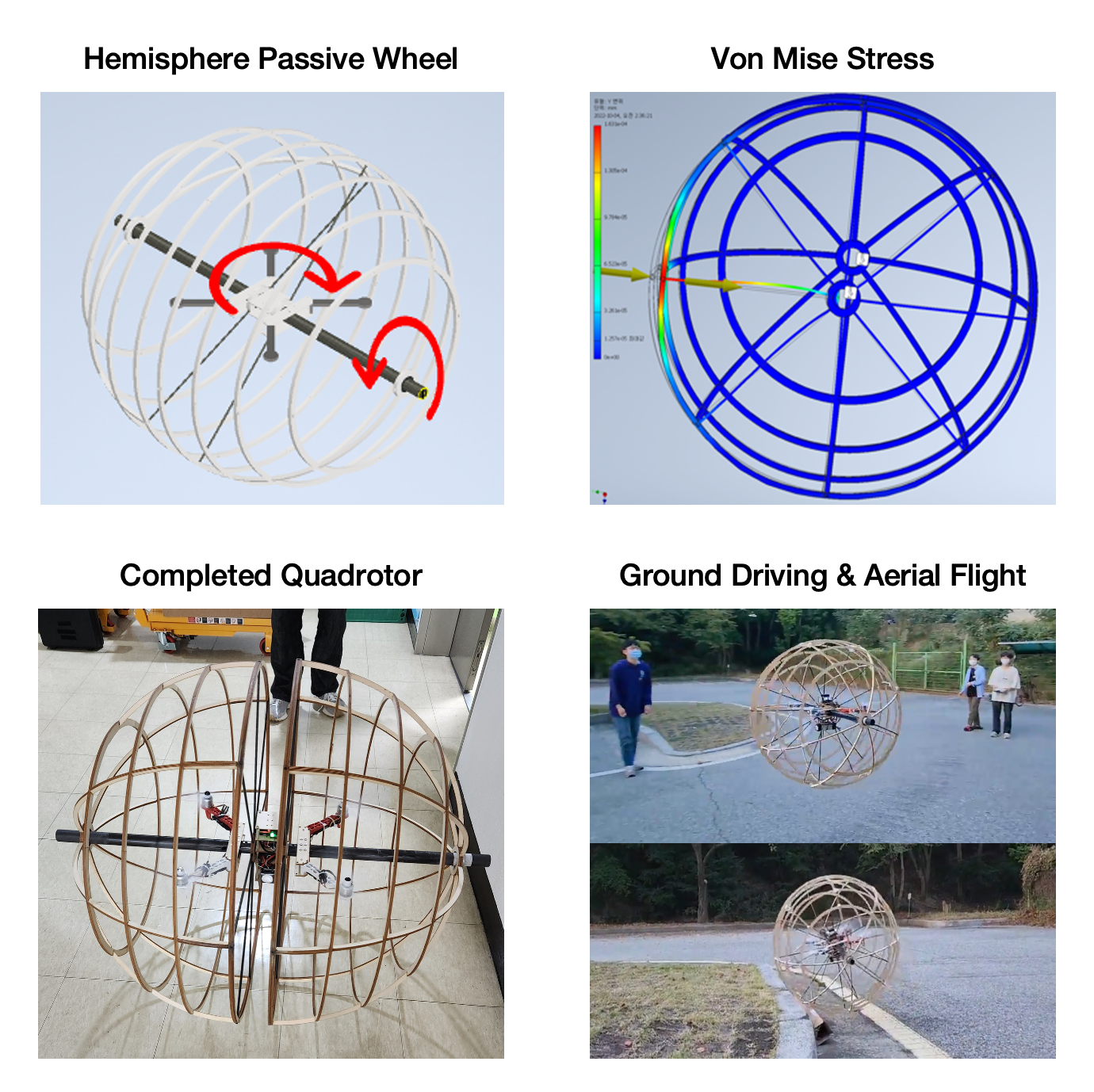
Design of air-land quadrotor using hemisphere shell passive wheel
This work presents a quadrotor system integrating a hemisphere-shell passive wheel, designed and demonstrated for combined air and ground mobility. Structural robustness was assessed via Von Mises stress simulations to evaluate resistance to external forces such as obstacle-induced impacts, revealing enhanced durability of the hemisphere passive wheel with a linear spoke design. The fabricated quadrotor was experimentally evaluated for ground and aerial mobility. Ground tests confirmed stable obstacle traversal, while aerial tests examined obstacle crossing during forward flight through IMU-based pitch angle measurements. By enabling combined air and ground operation, the proposed system overcomes conventional quadrotor path constraints and shows strong potential for low-detectability missions and deployment in extreme environments, including both military and disaster-response scenarios.
- Period: May. 2022 - Nov. 2022
- Affiliation: Aerospace Systems and Control Lab, Department of Aerospace Engineering, KAIST
- Award: 2nd Prize, 2022 Militech Challenge
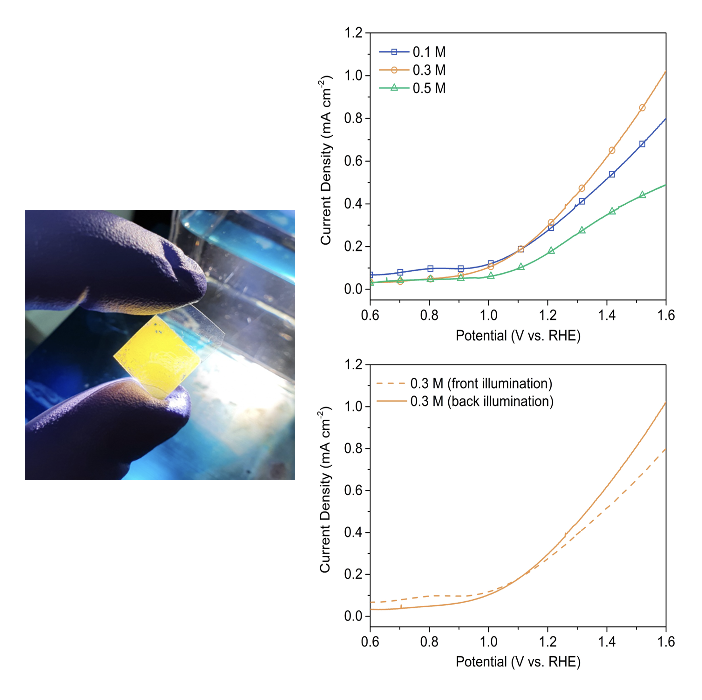
Fabrication of a flexible photoelectrochemical cell using laser
This work presents a fabrication method for a flexible PEC cell with a bismuth vanadate (BiVO₄) photoanode using laser-induced crystallization. A sol–gel–derived precursor solution was deposited onto an ITO–PEN substrate and annealed on a hot plate to form a BiVO₄ precursor layer. Laser-induced crystallization was then used to convert the precursor into crystalline BiVO₄ on the flexible substrate. The deposition of BiVO₄ was confirmed using scanning electron microscopy (SEM) and X-ray diffraction (XRD) analysis. The fabricated flexible PEC cell demonstrated a water oxidation current density of 0.45 mA/cm² for hydrogen production.
- Period: Jun. 2021 - Jun. 2022
- Affiliation: Novel Applied Nano Optics Lab (Prof. Junyeob Yeo), Department of Physics, Kyungpook National University (KNU)
- Award: 3rd Prize of Academic Conference